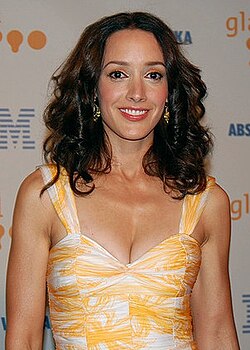
Celebrity throwback photos are one thing, and those that cause time to mutter like it had forgotten the month, the day of the week, even the hours of the day. Jennifer Beals, who is 62 years old, has just posted a sunny travel photo in Wales- standing in a sunlit field with mountains in the background and wind-tossed curls that are still reminiscent of the indisputable Flashdance figure.

Beals had addressed the country in her caption with a wink “Hello Wales, lover of magic consonants!” and had ended with “Cael diwrnod gwych.” This moment was untouched since there was neither a red carpet not a set light, only an actor whose face is forever synonymous with anyone who recollects the early-’80s craze of film-star mythology.
It is due to that familiarity to the year 1983, when Beals became a pop-culture presence as Alex Owens, the ambitions dancer, who made a living as a welder but still pursued his ballet ambitions at night. Flashdance tilted toward a new then-current rhythm: songs edited in the style of music videos, rapid editing, sequences that were made to be replayed, and it guided what a mainstream “dance movie” was and should sound like through the years. The style of the film became irremovable with its soundtrack; “Flashdance…. What a Feeling” also won the Academy Award in the category of the Best Original song and “Maniac” was another hit track that made a calling card. Even those who had never seen the film tended to know its imagery nonetheless, particularly the chair-and-water scene that became an iconic one and the off-the-shoulder sweatshirt that became an unintentional style guide.
Then, at the moment when the spotlight might have been made a permanent scene, Beals withdrew. She went back to Yale to complete her degree after Flashdance, reappearing later in minor roles, and then having a second long act on TV.
The latter came in 2004 with the pilot of Showtime series The L Word, which made Bette Porter, the poised, convoluted force of the art world of Beals, an attractive mainstream lesbian character (the TV series is a rare example of an author willing to tell a lesbian story). The show lasted six seasons, and the cultural afterlife of the series just continued to grow: shared watch parties, a fan base of rabid followers, and, as time went on, returned Beals to the life of Bette with the same lived-in panache that time gives off-screen.
Another medium Beals used to conserve that era was through another medium. In the early part of this year, she published The L Word: A Photographic Journal, which was constructed out of photographs that she quietly captured on set throughout the course of the show. What started as a secret gift, later came into the limelight following the fan fascination. It’s a way to hold onto a moment in time that was incredibly special, she said. It’s about remembering the joy and connection we all felt.
Labor has proceeded out of nostalgia. Beals has just finished Joy Will Prevail, a period drama, which is set in the early seventies where she stars as the wife of an architect, Louis Kahn, and the cast includes Griffin Dunne. When she is not in view of the camera, even her outing scenes have an earthy quality more tourist than reporter even when she is sure to invoke the same response: she resembles herself, and the culture still knows her.