
A stylish airport outfit can move smoothly right up to the scanner, then stall at the shoes. That detail matters more now because the long-running requirement to remove footwear at security has largely been rolled back. Under a 2025 TSA policy change, many travelers can keep their shoes on at checkpoints, a shift tied to newer screening systems and a broader “multi-layered” approach to security. The convenience is real, but it does not mean every shoe gets a free pass. Travelers who set off an alarm can still be asked to take shoes off for an added check.
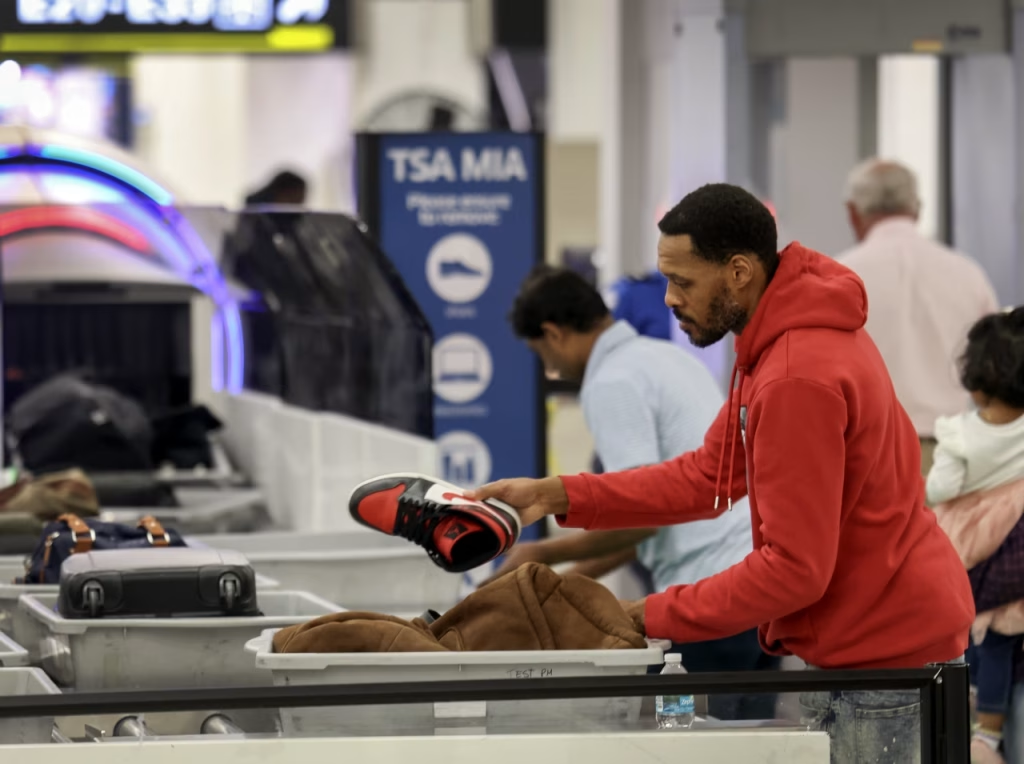
That is where footwear choice becomes less about fashion and more about friction. Shoes with metal components, dense hardware, or reinforced construction can attract extra attention from magnetometers and scanners. One category stands out in everyday travel: high heels can still create screening problems, because metal shanks and other internal supports may trigger alarms. Even as the checkpoint routine gets easier for many passengers, a shoe that reads as unusual or highly structured can still slow the process down. The TSA’s updated approach does not erase secondary screening. It narrows it.
Passengers whose boarding passes carry “SSSS” screening selection can still face additional steps beyond the regular line. So can travelers whose shoes or other items trigger an alarm. That helps explain why the most practical airport footwear has not changed as much as the rule itself has. Simple sneakers, loafers, and other low-profile shoes tend to move through the process with less interruption because they are easier to scan, easier to remove if needed, and less likely to contain materials that complicate inspection. By contrast, heavily built shoes, some boots, and heels can turn a routine walk-through into a bag check, wand screening, or manual shoe inspection. Even customized shoes are not automatically a problem, but unusual materials or visible metal can draw a closer look, especially when the scanner flags something that needs clarification.
There is also a second layer to the airport shoe question once security is over. Footwear that causes delays at the checkpoint may also create issues at the gate and onboard. In a widely shared comment, flight attendant Andrea Fischbach said, If there is an evacuation and slides are required, your high heels will have to come off, because they can puncture the slide. That makes heels a rare example of a shoe that can be inconvenient both before takeoff and during an emergency.
The quiet lesson is that the new shoes-on era is not a anything-goes era. Airport screening has become more flexible, not less selective. Shoes that are light, stable, and uncomplicated still match the way checkpoints work, even when travelers no longer have to automatically place them in a bin. The result is a familiar travel truth in a new form: the fastest airport shoe is usually the least dramatic one.


